



What are p-cards? 3 ways purchase cards support business growth

If you’ve ever been through a manual purchase order (PO) process, you know how painful, slow and error-prone it can be.
Organizations sometimes require sellers to send invoices via snail mail and receive paper checks. This process can create lengthy payment delays for sellers, while simultaneously draining cash reserves for buyers.
Once paper invoices are received, purchasing staff have to manually key in invoice data – a process fraught with errors. Companies might over or underpay a seller, record incorrect supplies or fall out of compliance. Businesses can save 55% to 80% of processing costs by switching from checks to card payments – with an average $63 savings per transaction.
Many businesses require multiple sign-offs on POs. Purchasing employees play phone and email tag to get approval, which can cause both delayed payments and start dates for projects.
And paper-based, manual processes make it impossible to track the status of PO orders. There’s no way to check and see if the PO has been received, approved or paid, which can result in duplicate orders and lost savings opportunities.
All that lost time due to inefficient processes can have large consequences. Payment delays can result in late supply deliveries. Frustrated customers may choose to cancel projects and take their business elsewhere, leading to lost revenue and damaged credibility.
Organizations are increasingly turning to purchasing cards, or p-cards, to streamline their purchasing processes.
What is a p-card?
A p-card is a type of credit card that allows employees to make purchases while bypassing the manual purchasing process. P-cards are frequently used for pre-approved, lower-dollar purchases. In many cases, like this example at Columbia University, employees can make p-card purchases for $2,500 or less. Anything above that threshold would need to go through standard PO channels.
Using a p-card in place of check payments, for example, is a key component that increases efficiency. Creating spending restrictions, like merchant-based approvals and daily limits, is another way p-cards benefit companies. They provide the freedom to spend within a rigid framework.
What is the difference between p-cards, virtual cards and corporate credit cards?
P-cards, virtual cards and corporate credit cards – there are so many options available to businesses today. What are the key differences?
P-cards are the basis for a spend management strategy. Companies could give employees either a virtual card or corporate credit card to make purchases. Both options, either virtual or physical, can be considered a p-card and part of the company’s spend management strategy.
That strategy may include spend controls like merchant-based spending rules, department-based limits, pre-approved amounts per employee and restrictions based on location or date. It could also include reporting tools for finance teams that offer insights, like spending patterns and savings opportunities.
Think of p-cards as the mapping of a spend management strategy to automated rules in a spend management platform.
Virtual cards and corporate credit cards are spending formats. If p-cards are the spending strategy, virtual cards and corporate credit cards are the tactics. There can be both virtual p-cards and physical p-cards.
Finance teams might choose virtual cards for back-office purchases like SaaS subscriptions, office supplies, legal counsel, bookkeeping and advertising. Each purchase uses a unique virtual card number that can be used once or multiple times. These types of purchases are generally fixed and done online, with no need for a physical card.
Corporate credit cards are a physical option that finance leaders might choose for purchases happening in the field, where a physical card is required. Employees who purchase gas, buy materials on-the-go or pay for client meetings are examples of physical p-cards.
How p-cards help businesses grow
Shifting to card payments = improved cash flow
Replacing checks with card payments allows companies to hold onto their cash reserves for longer. Instead of releasing cash when paying a PO, they can use a p-card to make that payment. Balances are generally due within 30 days, giving them a longer window to access working capital.
Using a p-card, purchasing agents can pay for POs on-time or even early. They can use those on-time and/or early payments as leverage to negotiate discounts with vendors. If they pay a PO upfront, rather than NET 30, the agent could negotiate a 5% discount. This process gives extra cash back to the business while meeting the seller’s needs for upfront payment.
Many p-card programs also have cash back offers – a benefit not available with checks. If an organization spends $250,000 per year on qualifying p-card purchases with a 3% back offer, they’ll earn $7,500 to reinvest in the business.
Increased efficiency = dramatic scaling
At a basic level, the use of p-cards automates a manual, paper-based process. It drastically reduces time spent managing the purchasing process. Transactions are recorded automatically online and matched to PO numbers. There’s no more manual data entry or email back-and-forth for approvals – it’s all automated.
That time-savings has other positive side effects. P-cards make employees much more efficient, meaning they can spend the majority of their time focused on their core work. Marketing team members who pay multiple vendors can easily make card payments in minutes, not hours. This change puts them back on task more quickly.
Spend controls = reduced risk, greater compliance
P-cards have pre-programmed spending controls that restrict purchases based on a company’s unique guidelines. These rules enable finance leaders to build custom spending limits per employee, group or department. They can create lists of approved and declined merchants. They can set thresholds for pre- approved spending and even restrict purchases based on location, day and time.
With p-cards, finance teams have much greater control over spending. Given that rules are enforced as purchasing happens, the risk of unapproved spending, expense fraud and non-compliance are close to zero. And there’s a cost savings in eliminating those problems. Unapproved charges, fraud and hefty non-compliance fees are no more. The control of p-cards gives finance leaders both cost savings for reinvestment in the business and confidence in their understanding of spending.
Real-time tracking = increased visibility
Moving from manual, check-based PO processing to p-card transactions that update in real-time gives finance leaders transaction visibility that they’ve never had. They can see purchasing in the moment, identify spending patterns, prevent budget overruns and use real-time data for accurate forecasting and modeling. All these activities help the business make strategic decisions about how and when to grow.
P-cards: the smart choice for growing businesses
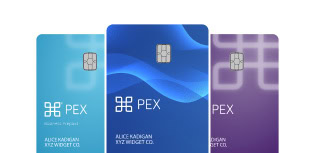
Combined with our spend management platform, PEX’s card options offer organizations the framework for a robust p-card program. We issue both virtual and physical cards with cash back earnings.
PEX’s virtual cards are a perfect fit for back-office purchases. For example, teams who need to buy SaaS subscriptions can leverage unique virtual card numbers for each vendor. Unique numbers help them easily categorize purchases, and the spend controls associated with virtual cards block unapproved charges. Our physical cards work best for higher spenders who have many transactions of varying amounts – think road warriors or c-level executives.
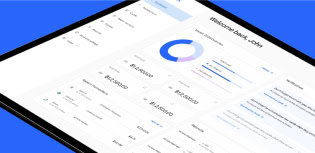
With the PEX platform and all of our card options, transactions are automatically recorded and matched to receipts, which are uploaded via the PEX mobile app. Admins can pre-program GL codes for auto-population and create automated approval workflows. These features drastically reduce time spent on manual PO processes.
Our customizable spend controls enable finance leaders to set limits by department, vendor or project. These controls decline unapproved purchases before they happen, preventing overspending on pre-approved budgets or department-specific policies. And finance teams can sync real-time purchasing data to their accounting platforms, providing an accurate, 360-degree view of spending.
Learn how you can leverage the PEX platform to create a p-card program, saving your organization time and money, and increasing control and visibility. Contact us today for a customized demo.



Opinions, advice, services, or other information or content expressed or contributed here by customers, users, or others, are those of the respective author(s) or contributor(s) and do not necessarily state or reflect those of The Bancorp Bank, N.A. (“Bank”). Bank is not responsible for the accuracy of any content provided by author(s) or contributor(s).