




AI-powered audit prep: Rethinking audit readiness as a year-round discipline

Hard truth: finance teams still treat audit prep as a season.
When auditors are on the calendar, finance teams scramble to gather receipts, reconcile transactions across spreadsheets and explain policy exceptions. They dig through inboxes. They rebuild reports manually. They spend hours reviewing documentation that should have been clean the first time.
The stress feels inevitable. The long hours seem normal. But the real problem isn’t the audit itself. It’s the operating model behind it.
As long as audit prep is an event, risk accumulates quietly all year. Missing and inconsistent documentation build up in the background. By the time audit season arrives, teams are reconstructing history under pressure.
Until recently, continuous audit readiness wasn’t a realistic option at scale. Now, AI embedded inside modern finance automation tools change what’s possible. Audit prep no longer has to be a seasonal cleanup. It can become a byproduct of how work happens every day.
How audit risk accumulates during everyday work
Audit issues rarely begin during audit season. They begin inside routine transactions.
An employee submits a receipt days late. A manager approves an exception without full context. Teams reconcile transactions across disconnected systems using spreadsheets. None of these moments feel urgent. But over time, they create small fractures in the audit trail.
Traditional automation can move financial data efficiently between systems. It can speed approvals and reduce manual entry, in some cases saving up to 30% of manual effort. But when controls operate after transactions are complete, gaps still form.
Because the work feels handled, the risk stays invisible. By the time audit prep begins, finance teams discover inconsistencies that have been compounding for months.
The audit doesn’t create the problem. It reveals the breakdown already embedded in daily workflows.
What AI-powered audit prep is (and what it isn’t)
AI-powered audit prep isn’t a checklist teams complete before auditors arrive. It isn’t a seasonal cleanup project. And it isn’t a separate workflow layered onto already complex finance operations.
It’s a shift in how finance teams operate.
Traditional audit prep treats the audit as a reporting exercise. Teams gather documentation, review transactions and correct inconsistencies after the fact, often under deadline pressure.
AI-powered audit prep reverses that model. It embeds accountability into daily operations instead of reserving it for review cycles. The objective isn’t to prepare faster when audit season arrives. It’s to operate in a way that makes reconstruction largely unnecessary.
When readiness becomes part of everyday workflows, the audit shifts from disruption to validation.
How AI makes continuous audit readiness possible
For years, finance teams have relied on month-end close automation to move faster. But traditional systems follow preset instructions. They process transactions based on fixed criteria, whether the context makes sense or not.
Those systems can’t interpret nuance. They can’t evaluate context. And they don’t scale judgment across thousands of transactions.
AI finance tools change that equation. They enable continuous evaluation at scale. Instead of waiting for batch reviews or month-end corrections, AI assesses transactions as they occur. It categorizes expenses, matches documentation and surfaces policy exceptions in real time, reducing the amount of manual review required during audit prep.
This shift reflects a broader movement across finance. Finance leaders are investing in tools that increase control and budget visibility, signaling that continuous audit readiness is becoming the new standard rather than a seasonal aspiration.
When evaluation happens continuously, audit readiness no longer depends on a seasonal review. It becomes embedded in every stage of the audit lifecycle.
What continuous audit readiness looks like across the audit lifecycle
When finance teams build audit readiness into daily operations, the audit lifecycle changes.
Before auditors arrive:
Finance maintains clean, centralized records throughout the year. Documentation stays attached to transactions. GL coding remains consistent. When auditors request support, the team isn’t assembling files. They’re granting access to information that already exists.
During fieldwork:
Teams respond quickly. They back up policy enforcement with system-level records instead of email threads. Fewer transactions require reclassification or follow-up because controls operated earlier in the process.
After the audit:
Auditors issue fewer findings tied to documentation gaps or inconsistent coding. Finance teams spend less time correcting prior-period errors and more time moving directly into the next reporting cycle with clean, defensible data.
Real-time visibility across spend workflows reduces retroactive cleanup, and the audit stops being a disruption. It becomes validation that controls are working as designed.
How PEX operationalizes continuous audit readiness
Continuous audit readiness starts with structured, automated workflows. PEX standardizes how organizations authorize, record and document spend. This creates a baseline of consistent, clean data from the moment each transaction occurs.
Layering AI on top of that baseline adds real-time evaluation. PEX suggests transaction codes based on historical patterns and matches receipts to transaction records. The result is a system that not only prevents errors but continuously validates the integrity of the audit trail.
- Stronger controls at the point of spend
Finance teams issue virtual and physical cards by role, project or vendor with predefined limits and merchant rules. Those guardrails centralize transaction records and prevent out-of-policy purchases before they occur, reducing downstream correction and audit findings - AI-powered receipt matching and automated GL coding
PEX matches receipts to transactions and assigns GL codes in real time. Mobile capture enables employees to submit documentation at the time of spend. That reduces manual reconciliation, limits reclassification during fieldwork and shortens audit prep cycles - Real-time visibility across spend
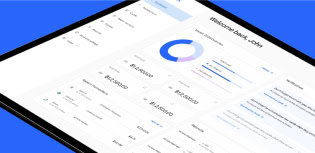
Dashboards show who spent what and when across teams and locations. When auditors request a sample of transactions, finance teams can quickly filter by department, vendor or date range and produce documentation tied directly to each charge. That level of visibility reduces back-and-forth during fieldwork and eliminates hours of manual report building - Seamless accounting integrations:
PEX automatically syncs with 50+ accounting platforms, reducing manual entry, minimizing the risk of errors and creating a clear audit trail from card swipe to financial statement. When auditors review balances, finance teams can demonstrate that underlying transaction data aligns with the system of record
These capabilities combined translate into 657+ hours saved annually. That’s time finance teams can redirect from manual cleanup to strengthening controls, analyzing spend trends and supporting leadership decisions.
Audit readiness is a system, not a season
Audit readiness doesn’t come from working harder during audit season. It comes from building systems that standardize documentation and maintain clean data year-round. By combining expense management automation with AI-driven evaluation, PEX helps finance teams reduce manual work and approach every audit with confidence.
Book a demo to see how PEX helps finance teams stay audit-ready year-round.



Opinions, advice, services, or other information or content expressed or contributed here by customers, users, or others, are those of the respective author(s) or contributor(s) and do not necessarily state or reflect those of The Bancorp Bank, N.A. (“Bank”). Bank is not responsible for the accuracy of any content provided by author(s) or contributor(s).