




5 corporate card features every finance team should look for

Not long ago, corporate cards served a relatively simple purpose: helping employees make business purchases without paying out of pocket.
At the time, the status quo of paper statements, manual spreadsheets and historical reviews was acceptable because there was no other option. Fast forward to today, and finance teams expect much more.
Spending data now moves digitally and in real time. Finance teams expect transactions, receipts and expense details to flow automatically between systems. As a result, organizations are looking beyond basic payment functionality and evaluating how corporate card programs can support broader finance operations.
That shift is especially important in organizations with complex spending environments. Whether supporting traveling employees, field staff or project-based budgets, finance teams need ways to control spending, reduce administrative work and maintain visibility across the organization.
The best corporate card programs help finance teams do exactly that, but not all corporate card solutions are up to the task. When evaluating options, finance leaders should look beyond fees and rewards and focus on the features that have the biggest impact on finance operations.
What should finance teams look for in a corporate card program?
1. Easy card administration and corporate card management
Corporate cards create administrative work long before a transaction takes place. Finance teams need to issue cards to new employees, remove access when employees leave, update spending permissions as responsibilities change and respond quickly when problems arise.
For example, a project manager may need temporary purchasing authority for a new initiative. A traveling employee might need a spending limit increase while on the road. A lost card may need to be frozen immediately and replaced without disrupting work. These tasks become increasingly difficult when card management is spread across multiple systems or requires manual intervention.
The best corporate card programs simplify corporate card management by allowing finance teams to issue, deactivate and manage cards from a central platform. Virtual and physical cards, spending permissions and user access can all be adjusted in real time, making it easier for finance teams to maintain control as spending needs change.
2. Flexible card options for different spending needs
Not all employee spending looks the same. A traveling sales representative, a construction project manager and a nonprofit program coordinator may all need purchasing authority, but their spending patterns can be very different.
That’s why many organizations struggle with one-size-fits-all corporate card programs. Finance teams need employee expense cards to match the card type to the right use case, including:
- Employee travel: Airfare, lodging, meals and other business travel expenses
- Field purchases: Materials, supplies and job-site spending
- Department budgets: Recurring software subscriptions and team expenses
- Project-based spending: Temporary purchasing authority tied to specific initiatives
- Temporary worker expenses: Limited spending access without creating risk
- Nonprofit program spending: Tightly controlled, grant-restricted funds
A traditional corporate card may make sense for traveling employees, while prepaid expense cards are a better fit for temporary workers. Virtual cards may be best to keep recurring software subscriptions from going over budget. Corporate card programs should support a variety of spending needs without requiring finance teams to manage multiple disconnected systems.
3. Spend controls that prevent out-of-policy spending
Many finance teams don’t discover a problem until after the purchase has already been made. An employee exceeds a department budget or makes a purchase from an unapproved vendor. At that point, finance teams are left deciding whether to request reimbursement or make an exception.
Modern corporate card programs help prevent these situations before they happen. Instead of relying on manual reviews after the fact, finance teams can establish rules that automatically govern how cards are used.
Common spend controls include:
- Spending limits: Restrict purchases by transaction amount, time period or location
- Merchant category restrictions: Block spending at specific types of businesses
- Department-level budgets: Align card usage with approved budgets
- Approval workflows: Require additional review for certain purchases or spending thresholds
- Role-based controls: Tailor permissions based on employee responsibilities
The goal is not to create more friction for employees. Automated spend controls help eliminate the uncertainty that often surrounds company spending. Instead of discovering a policy violation after the fact, employees receive immediate feedback when a purchase falls outside approved guidelines.
The result is fewer exceptions and less administrative overhead for finance teams. By preventing out-of-policy purchases before money leaves the account, organizations can reduce risk and improve budget oversight.
4. Decreased manual work and streamlined reconciliation
Many finance teams still spend a significant amount of time collecting receipts, matching transactions, coding expenses and preparing for month-end close. When corporate card data and financial systems are disconnected, routine tasks can drain time and resources, slowing reconciliation and delaying reporting.
Modern corporate card programs help reduce this administrative burden by automating many of these workflows, including:
- Receipt capture: Collect documentation at the time of purchase
- Transaction tracking: Match spending activity to individual cardholders
- Expense coding: Assign transactions to the correct categories
- Approval routing: Direct transactions to the appropriate reviewer
- Reimbursement workflows: Manage out-of-pocket employee expenses alongside card spending
- Accounting integrations: Sync transaction data directly with accounting systems
The goal is simple: finance teams should spend less time processing expenses and more time analyzing them.
5. Instant visibility into spending as it happens
Many organizations still rely on historical reporting to understand where money was spent, which departments have exceeded budget limits and whether purchases aligned with company policies. By the time finance teams identify a problem, the spending has already occurred.
Modern corporate card programs provide real-time visibility into purchases as they occur. Instead of waiting for month-end reports, finance teams can monitor transactions, track budgets and identify potential issues before they become larger problems.
Key reporting and visibility features include:
- Real-time expense reporting: View spending activity as transactions take place
- Department-level visibility: Monitor expenses across teams, locations or projects
- Budget tracking: Compare spending against approved budgets
- Transaction monitoring: Identify unusual activity and policy exceptions
- Audit support: Maintain a clear record of purchases, approvals and supporting documentation
Visibility also benefits employees. Cardholders should be able to understand spending limits, approval requirements and card status without needing to contact finance. Clear access to this information reduces confusion and helps employees make informed purchasing decisions.
Why finance teams choose PEX
PEX combines corporate card options and expense management software in a single platform, helping finance teams manage spending from purchase to reconciliation.
Key capabilities include:
- Multiple card options: Support different spending needs with the PEX Visa® Commercial Card, PEX Visa® Prepaid Card, PEX Disburse Visa® Prepaid Card and virtual cards. Issue, deactivate, block and unblock cards from the PEX platform
- Real-time spend controls: Set limits by employee, department, amount, merchant category and timeframe to help prevent out-of-policy spending. Create multi-level approval workflows to ensure purchases go through the appropriate channels
- Automated expense management: Capture receipts via email, text or mobile app, match purchases to transactions with AI and code transactions using pre-programmed GL coding
- Accounting integrations: Autosync transaction data with 50+ accounting systems like QuickBooks, NetSuite, Sage Intacct and Microsoft Dynamics
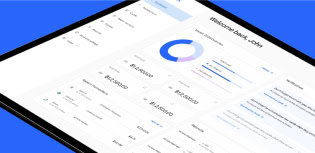
- Real-time reporting and visibility: Monitor spending activity as it happens, track department budgets and review transactions from a centralized dashboard
By bringing cards, controls, automation and reporting together in one platform, PEX helps finance teams reduce administrative work while maintaining greater control over spending.
In a commissioned study conducted by Forrester Consulting on behalf of PEX, the Total Economic Impact™ study of PEX (2025), a composite organization achieved 8,700 hours of productivity savings in Year 3 and $788,000 in present-value productivity gains through improved finance operations and automation.
Ready to modernize your corporate card program? Book a demo to see how PEX can help your organization gain greater control, visibility and efficiency.



Opinions, advice, services, or other information or content expressed or contributed here by customers, users, or others, are those of the respective author(s) or contributor(s) and do not necessarily state or reflect those of The Bancorp Bank, N.A. (“Bank”). Bank is not responsible for the accuracy of any content provided by author(s) or contributor(s).