




The best finance reconciliation tools with built-in spend controls

What if the biggest financial risk your organization faces isn’t theft, but a lack of visibility?
In 2023, state auditors found that the Oklahoma Department of Commerce mishandled almost $13 million in pandemic relief funds—not through intentional fraud, but lack of oversight. Documentation was missing. Records didn’t match. No one had clear visibility into how the money was being spent.
The report called out “repeated oversights, errors and failure to follow basic record-keeping practices.” In other words, reconciliation wasn’t keeping pace with reality.
Finance leaders are no strangers to this problem. When expenses move faster than the tools that manage them, visibility slips and small inconsistencies turn into big surprises. And the challenge that tripped up a state agency isn’t unique: finance teams everywhere face the same pressure to move faster with fewer guardrails.
The solution isn’t more oversight: it’s smarter tools that reconcile and control spend in real time. With built-in controls that link every transaction to a budget or policy, finance teams can stay ahead of the close instead of cleaning up after it.
Why finance teams need built-in spend controls now
Today’s finance leaders need systems that keep them in control and out of the headlines. The margin for financial error has never been smaller.
- Teams are leaner and budgets are tighter. Economic pressure and headcount limits mean finance is being asked to do more with less. The close still has to move faster. But without built-in controls, accuracy and accountability are the first things to slip
- Boards, auditors and investors now expect instant visibility into how money moves. Manual reviews and spreadsheet checks can’t deliver that transparency, or the confidence it requires
- Compliance expectations are also rising. From federal grants to ESG disclosures, every organization needs an audit trail that’s complete and automatic. Automated spend rules deliver that by enforcing policies and documentation at the point of spend
- Spend happens everywhere with remote and distributed teams: across projects, programs and offices. Policy-based controls are the only way to maintain visibility at scale
- And as automation and AI redefine finance, leaders are expected to operate in real time, not after the close. Built-in spend controls make that possible, keeping data accurate and decisions timely
- Finance has become a strategic driver, not just a cost center. After years of focusing on tracking historical spend, finance leaders now have access to real-time controls—gaining the visibility and speed they need to stay competitive without adding complexity
Choosing the right finance reconciliation tool for your organization
Many automated reconciliation tools claim to simplify workflows and save time, but most still treat spend management and policy enforcement as separate steps. When evaluating platforms, here’s what to look for as a baseline:
- End-to-end automated reconciliation
Proactive, embedded spend control is only possible when reconciliation is completely automated. From receipt capture to transaction matching to approvals, every step of reconciliation should live in an automated workflow that creates a continuous audit trail.
- Policy enforcement at the point of spend
True control happens before the transaction, not after. Look for tools that offer physical and virtual cards for business, and provide a variety of customizable rules that scale with your organization’s growth.
- Real-time visibility into expense data
Any tool that supports built-in spend controls must surface transactions as they happen, not at the end of the day or month. Live data helps finance spot discrepancies early, course-correct budgets and make confident decisions.
- Pre-built integration with existing systems
Finance shouldn’t have to rebuild its tech stack to integrate a new automated reconciliation platform. The right tool integrates seamlessly with your accounting platform and autosyncs data instantaneously.
Ultimately, the best reconciliation tools leverage automation and AI to create control over complexity. They don’t just reconcile transactions; they protect businesses from unintended risk. A growing number of expense management platforms now promise those outcomes, but how do they really compare?
Top finance reconciliation tools: How PEX compares to Ramp, Spendesk and Expensify
Finance teams have no shortage of expense management software options, but each platform tackles the reconciliation challenge from a slightly different angle. Some emphasize employee experience while others focus on card controls. Here’s what sets them apart, and how finance teams can decide which model fits best.
PEX
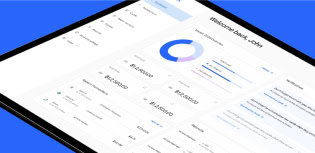
PEX combines real-time employee expense tracking and pre-spend control in one unified platform. Card transactions flow directly into PEX as employees make purchases. Automated receipt capture, pre-programmed GL coding and AI-enabled transaction matching streamline reconciliation workflows. Finance leaders gain full visibility across projects, departments and users, with live dashboards and reports.
Using virtual, physical and prepaid card options, finance teams can set granular spending rules by vendor, category, time, location, cardholder and more. Card blocking for missing receipts and multi-level approval workflows ensure compliance at the point of spend. With direct integrations into 50+ accounting systems, PEX gives finance continuous visibility and confidence in every transaction—from purchase to close.
Best for: growing finance teams that need comprehensive spend control, real-time reconciliation and audit-ready accuracy across every transaction type.
Spendesk
Spendesk delivers pre-approval workflows and multi-currency reconciliation that appeal to global teams. Managers can issue physical or virtual cards, enforce spend limits by department and approve transactions before they occur. The platform automates receipt-to-transaction matching and uses OCR and machine learning to pre-fill expense accounts and VAT codes. Real-time dashboards surface committed and available budgets, while accounting integrations automate data exports into ERPs like Xero or NetSuite. However, some U.S. customers report having to rely on custom exports depending on their accounting stack or region.
Best for: European or multinational teams seeking consistent oversight across currencies and entities.
Expensify
Expensify focuses on employee reimbursements and receipt capture. The platform now supports the Expensify card with SmartScan receipt extraction, auto-categorization and approval workflows. Visibility is primarily at the transaction level rather than organization-wide, and spend rules apply post-purchase instead of pre-spend.The platform integrates with leading accounting systems like QuickBooks and NetSuite, enabling data export and ledger sync. While corporate card transactions reconcile in near real-time, many teams still perform approval reviews or manual reconciliation steps for non-card or travel spend.
Best for: Smaller or fast-moving organizations that prioritize reimbursement speed and mobile ease over strict, policy-driven spend controls.
Ramp
Ramp positions itself as an automation-first platform for high card-transaction volumes, but its strengths are mostly limited to card-based spend. Purchases sync quickly and AI-driven categorization reduces manual work, providing near real-time visibility into card activity—though accuracy can depend on setup and data quality. Its spend controls are robust for card transactions but offer limited coverage for reimbursements or non-card payments. Ramp integrates with major accounting platforms, though some advanced features are gated behind premium tiers, leaving many teams to supplement with outside tools to close visibility gaps.
Best for: Organizations focused on card-spend automation and reporting efficiency, rather than comprehensive reconciliation or policy control.
PEX: the smart choice for reconciliation and spend control
PEX gives finance teams the automation to reconcile transactions as they occur and the structure to enforce policies before spend happens. That connection between policy and purchases is what keeps budgets aligned, close cycles faster and auditors satisfied.
Take Skeehan & Young, a financial-services firm serving nonprofits. Before PEX, they wrestled with multiple users sharing cards, missing receipts and manual reconciliations that dragged on for days. After switching to PEX, they cut 8 hours from every monthly close. With card-level budget limits and merchant spending restrictions, every transaction hits the right budget automatically. No more chasing down charges or guessing who spent what.
And they’re not alone. Over half of PEX users report saving money by creating custom spend rules.Those built-in controls free finance teams to focus on strategy instead of damage control.
PEX’s platform adapts to how finance actually works today, with distributed teams and complex budgets that are constantly changing. Every transaction flows through a single system that enforces limits, captures receipts and syncs instantly to your general ledger. With that visibility, finance can stay focused on forecasting and growth instead of backtracking through missing data.
Want to see how built-in controls could take your finance team to the next level? Request a personalized demo today.



Opinions, advice, services, or other information or content expressed or contributed here by customers, users, or others, are those of the respective author(s) or contributor(s) and do not necessarily state or reflect those of The Bancorp Bank, N.A. (“Bank”). Bank is not responsible for the accuracy of any content provided by author(s) or contributor(s).